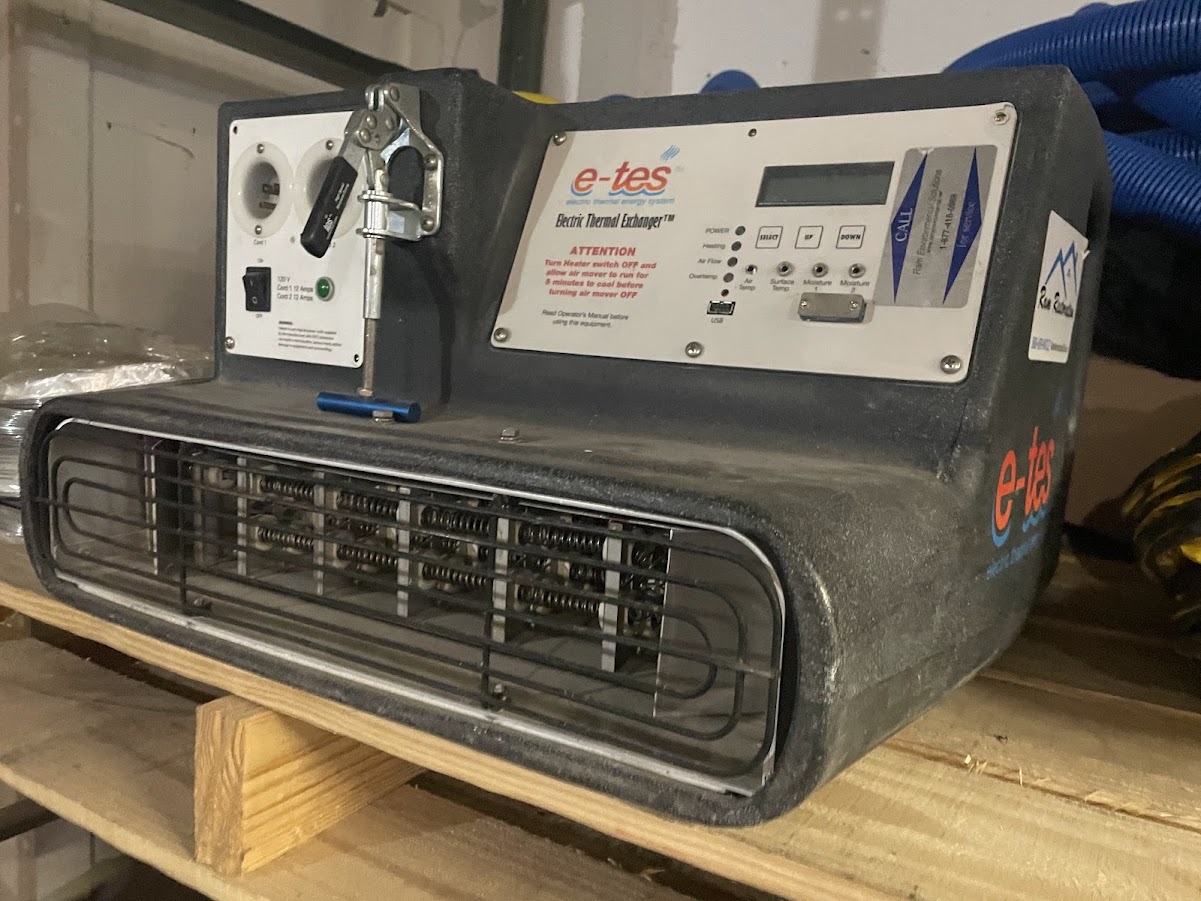
If you’ve ever had a restoration company respond to water damage in your home or commercial building, you’ve seen the equipment: industrial air movers aimed at baseboards, commercial dehumidifiers humming in corners, and technicians checking readings on a handheld device every morning. The process is called structural drying — and it’s one of the most commonly misunderstood aspects of water damage restoration.
Most people understand that wet things need to dry. What’s less obvious is why that process requires professional equipment, why it takes several days, and why a surface that feels dry to the touch isn’t the same as a building assembly that’s actually dry. That distinction matters — and understanding it helps you know whether a restoration job was done right.
What Structural Drying Actually Is
Structural drying is the controlled removal of moisture from building materials — not just the air in a room, but the actual assemblies: drywall, insulation, wall framing, subfloor, hardwood, concrete, and any other material that absorbed water during the event.
When water enters a building — through a pipe failure, a roof breach, a flooded basement, or any other source — it doesn’t stay where you can see it. Water follows the path of least resistance. It migrates horizontally along subfloor materials, travels vertically through drywall via capillary action, saturates insulation batts inside wall cavities, and pools in low spots behind finished surfaces. Within hours of a water event, moisture is in places you can’t see and can’t reach by mopping a floor or running a fan.
Structural drying addresses all of it — not just the visible wet surfaces, but the building assembly behind and beneath them.
Why a Fan From the Hardware Store Won’t Do It
This is a question we hear regularly, and it deserves a straight answer.
Consumer fans and dehumidifiers are designed for comfort — moving air around a room, maintaining a comfortable humidity level. They are not engineered for moisture extraction from structural materials, and the numbers make the gap clear.
Professional air movers generate 3 to 4 times more airflow than consumer fans at a fraction of the noise footprint. More importantly, they’re positioned strategically — aimed at floor-wall junctions, inside wall cavities when warranted, and across flooring systems — to create the turbulent airflow that pulls moisture out of material surfaces rather than simply moving room air.
Commercial dehumidifiers extract 10 to 15 times more moisture per day than consumer units. They’re designed to maintain extremely low relative humidity levels in a drying environment — the low humidity is what creates the vapor pressure differential that draws moisture out of materials and into the air, where the dehumidifier can capture it.
Running a household fan in a water-damaged room will dry the surface faster than doing nothing. It will not dry the structural assembly. The moisture inside the wall, under the floor, and in the insulation stays — and it stays wet long enough for mold to establish.
How We Know When the Job Is Actually Done
This is the part of structural drying that separates a professionally completed job from one that just looks finished.
When our team arrives at a water damage job in the Dayton area, the first thing we do is take baseline moisture readings throughout the affected area. Using calibrated moisture meters and thermal imaging cameras, we map the moisture content of every affected material — drywall, subfloor, framing, and any other structural component that registered elevated readings. Those baseline numbers are documented.
Every day the equipment runs, we return and take readings in every mapped location. We track the numbers against the previous day’s measurements and against the IICRC S500 standard — the industry document that defines the acceptable moisture content thresholds for specific building materials. Structural drying is complete when the readings confirm that materials have reached those thresholds throughout the assembly, not just at the surface.
“It feels dry” is not how we determine a job is done. Documented moisture readings are.
This daily monitoring process serves two purposes: it confirms the drying is working and progressing on schedule, and it produces a documented record of the job completion — which matters for insurance claims and matters even more if any moisture-related issues emerge later.
What Happens If Structural Drying Is Skipped — or Done Wrong
The short answer: mold.
The slightly longer answer: the timeline is faster than most people expect. Within 24 to 48 hours of water intrusion, dormant mold spores — which are present on virtually every building material — begin to germinate. They produce root structures that penetrate drywall paper and wood fibers. Moisture alone is no longer sufficient to eliminate them; remediation is required. After 48 to 72 hours, active colonies are typically visible, and spores are being distributed through HVAC systems to connected spaces throughout the building.
A structural drying job that’s cut short — equipment pulled before readings confirm completion because the surface looks dry — leaves residual moisture inside the wall assembly. That moisture is invisible from the outside, and it’s sufficient to sustain mold growth. The result is mold discovered months later when a wall is opened for a renovation, or when odor becomes noticeable and the source isn’t immediately obvious.
The other consequence of incomplete drying is structural: wood framing and sheathing that stays wet for extended periods loses structural integrity. Subfloor materials delaminate. Hardwood flooring cups and buckles. These are not minor cosmetic issues — they’re structural problems that require significantly more work to address than a properly completed drying job would have cost.
How Long Does Structural Drying Take?
The honest answer is that it depends on the materials involved, the extent of saturation, and the conditions in the building.
A contained water event — a single bathroom with vinyl flooring and tile, minimal wall saturation — may dry to standard in three to five days. A larger event involving wood subfloor, insulation-filled wall cavities, and significant standing water time may take seven to ten days or longer.
What structural drying should not do is rush. Equipment that gets pulled early because a homeowner or contractor wants to move to the next phase doesn’t save time — it creates a more expensive problem downstream. We tell every client in the Dayton area the same thing: the equipment runs until the readings confirm it’s done.
Structural Drying Is Part of Every Water Damage Job We Do
At Ram Restoration, every water damage response in the Miami Valley includes baseline moisture mapping, strategic equipment placement, and daily monitoring to IICRC S500 standards. We document every reading, every day, so you have a complete record of the drying process from start to confirmed completion.
If water damage is something you’re dealing with right now — or if you’ve had a previous restoration job and have questions about whether the work was completed properly — call us. We give straight answers and we’re available around the clock.
Call 937-885-0088 — 24/7 water damage response in Dayton, Ohio