A behind-the-scenes look at what a restoration team does in the first 24 hours after a major storm event — from the first call to equipment in place.
Most people have never seen the inside of a professional storm damage response. They know something happened — wind, water, a tree — and then they know the end result after weeks of work. What happens in between, and particularly in the critical first 24 hours, is less visible.
This post pulls back the curtain on what a professional storm response actually involves — not as a sales piece, but as a practical explanation of the process for anyone who may be facing it for the first time.
The Call
Storm responses frequently come in during or immediately after the weather event — sometimes in the middle of the night. The first call establishes the basics: what happened, what’s the current condition of the property, is anyone in immediate danger, and what is the address.
From there, a response team is dispatched. For Ram Restoration, 24/7 availability is not a marketing claim — it is an operational requirement. The value of a restoration company that is theoretically available but practically unreachable at 2am during a storm is zero.
First on Scene: Safety and Stabilization
The first priority when a restoration team arrives is not equipment — it’s safety. A storm-damaged structure may have compromised load-bearing elements, downed electrical lines, gas leaks, or other hazards that need to be identified before work begins.
Once the space is cleared as safe, emergency stabilization begins. For a roof breach, this means temporary weatherproofing — heavy-duty tarps, poly sheeting, or emergency boarding — to stop additional water from entering the structure while permanent repairs are coordinated.
Documentation Before Extraction
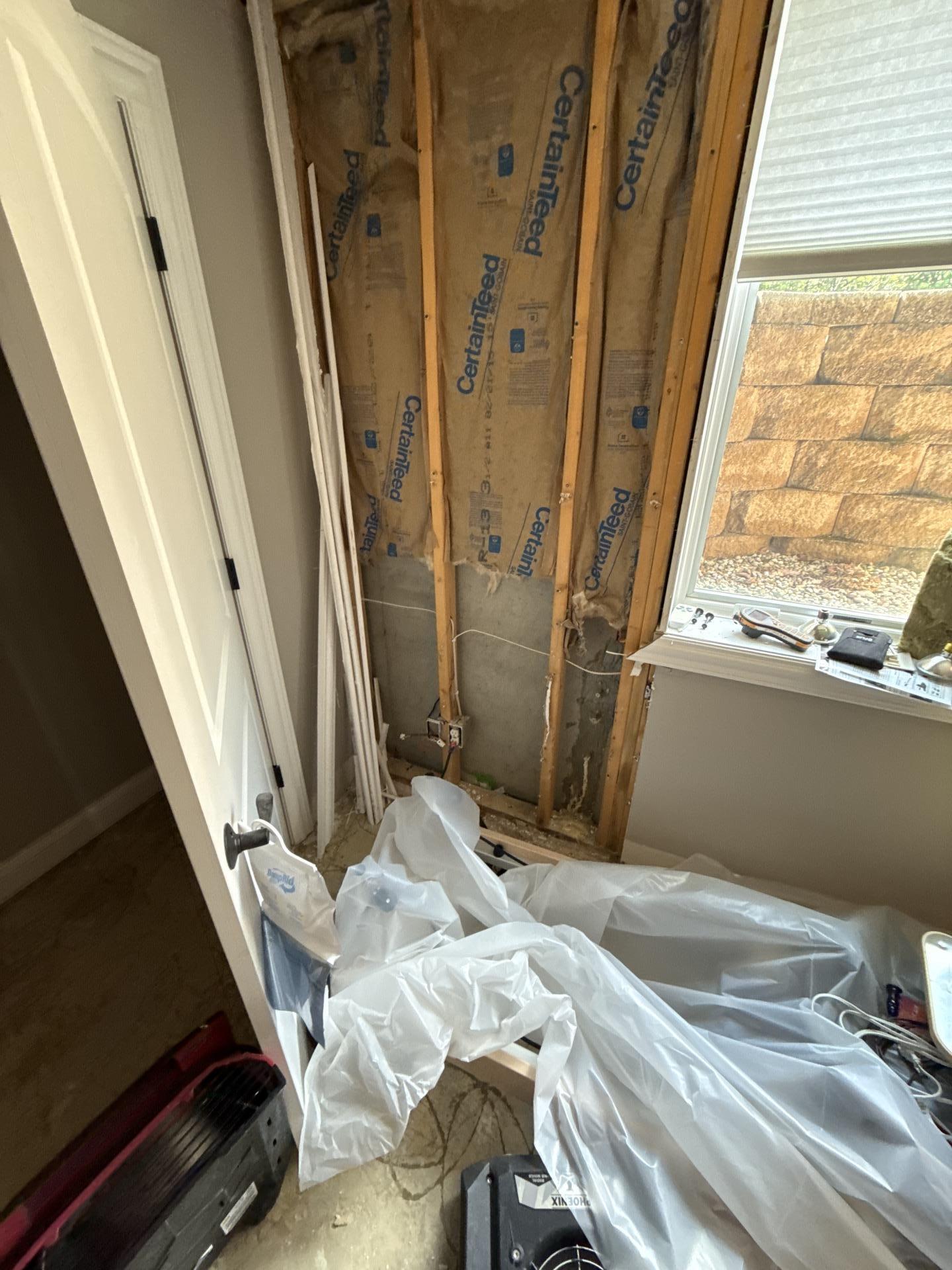
Before extraction equipment goes into a space, the team documents existing conditions. Photo and video documentation of all affected areas. Moisture readings at every relevant point to establish the baseline condition. This documentation serves the insurance claim and provides the starting point for measuring drying progress.
Documentation before extraction is not optional — it is the professional standard. A restoration team that skips this step is skipping the evidence that protects the property owner throughout the claims process.
Extraction
Industrial extraction equipment removes standing water from the affected space. This is not a shop vacuum — it is truck-mounted or portable extraction equipment designed for high-volume water removal from flooring systems, carpet, and structural cavities. The goal is to remove all extractable water before the drying phase begins.
Water that can be extracted does not need to be evaporated. Evaporation takes significantly longer and requires more energy from the drying equipment. Thorough extraction shortens the total drying time and reduces the risk of mold growth during the drying phase.
Moisture Mapping
After extraction, the team conducts a full moisture map of the affected areas. Calibrated moisture meters measure the moisture content of every affected surface. Thermal imaging identifies temperature differentials caused by evaporative cooling in wet areas that aren’t visible to the eye.
The moisture map is the guide for everything that follows. Equipment goes where the moisture is. Without a map, equipment placement is guesswork — and guesswork means some wet areas don’t get addressed.
Equipment Placement and Daily Monitoring
Industrial air movers and dehumidifiers are positioned based on the moisture map. The goal is to create airflow patterns that pull moisture from wet materials, evaporate it into the air, and remove it from the building via the dehumidifiers. The number and placement of units is calculated based on the volume of the space and the moisture readings.
Every day, the team returns to take readings at all mapped points, adjusts equipment as drying progresses, and documents the results. The job is not complete until confirmed dry readings are achieved at every point on the map — not after a fixed number of days.
The Coordination Layer
A significant storm event often involves more than one trade. Roof damage requires roofing repair. Structural damage may require a general contractor. If mold is found during the mitigation process, remediation is a separate scope.
Ram Restoration is part of the Ram Holdings family — which includes Ram Roofing, Ram Construction, and Ram Mold Pro. When a storm response reveals work that falls outside restoration, the right team is one call away. The property owner doesn’t manage the coordination between trades. Ram Holdings does.
Ram Restoration responds to storm damage events 24/7 throughout the greater Dayton area and Miami Valley. One call initiates the full Ram Holdings response. 937-885-0088