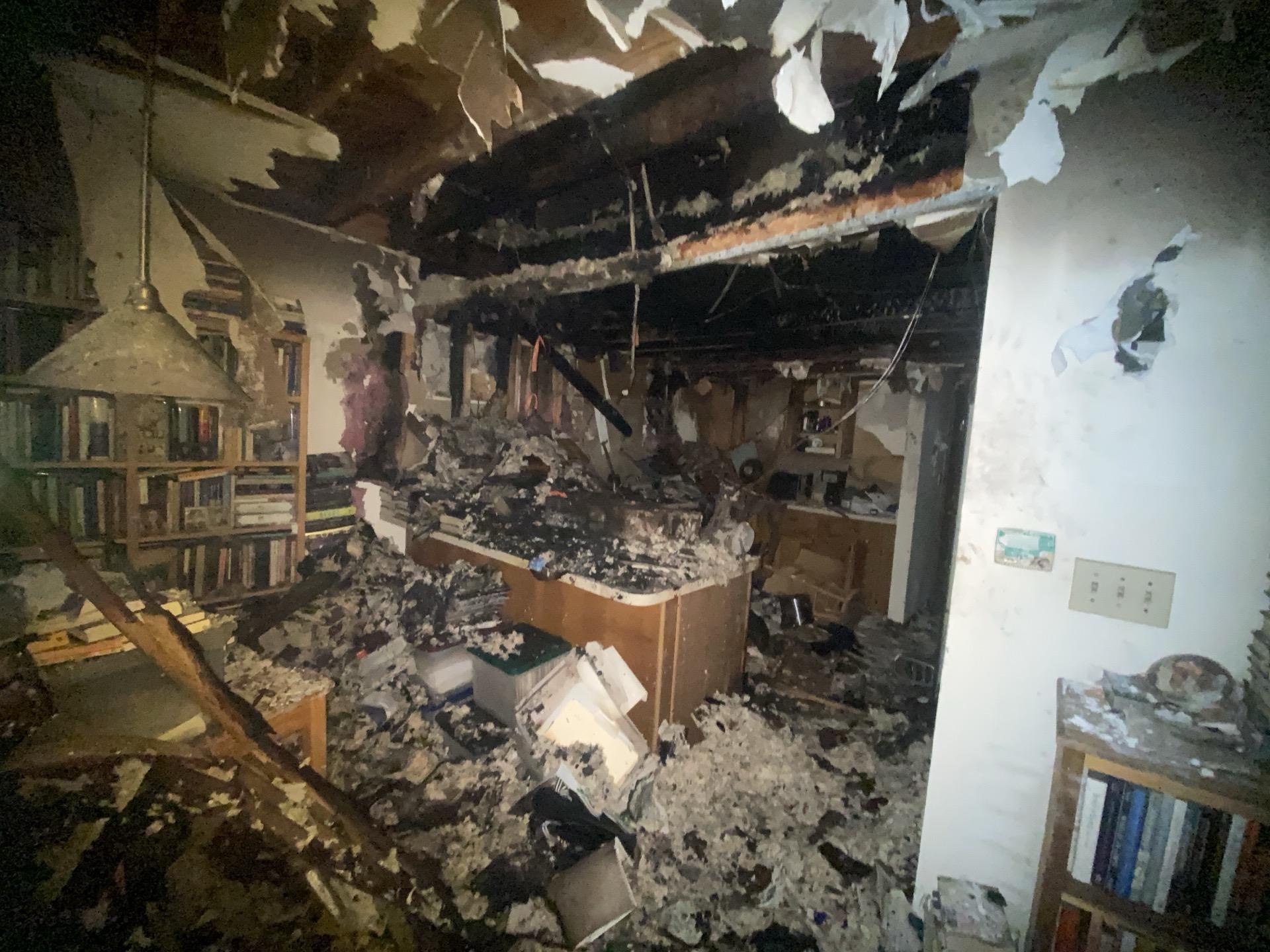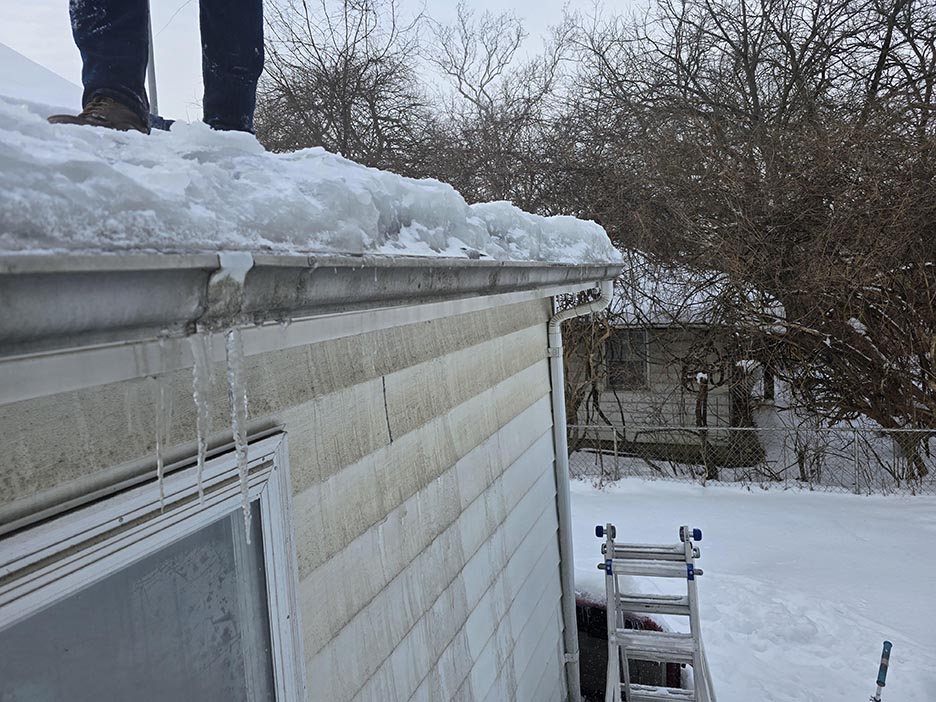
Icicles along the gutters can look like a holiday card. But when that ice builds into a ridge along the edge of the roof, it can force water somewhere it was never meant to go: into your attic, your walls and your ceilings.
Ice dams start outside, but homeowners usually find out about them inside — a brown stain on the ceiling, peeling paint near a window or a damp spot on an upstairs wall. Here’s how ice dams form, what to watch for as the first snow arrives across the Miami Valley and what to do when water starts finding its way in.
What is an ice dam?
An ice dam is a ridge of ice that forms at the edge of a roof, usually along the eaves and gutters. It holds back melting snow behind it. That trapped water has nowhere to drain, so it pools on the roof.
How do ice dams form?
It starts with uneven roof temperatures. According to the University of Minnesota Extension, ice dams form when parts of the roof are warmer than others. Heat escaping from the living space into the attic warms the upper roof deck and melts the snow sitting on it. That meltwater runs down the roof until it reaches the colder edge — the overhang above the eaves, which isn’t warmed by the house — and refreezes. Over days of snow and melt, the ice builds into a dam.
The Insurance Institute for Business & Home Safety describes the same cycle: warm attic air heats the roof, snow melts, and the water refreezes at the edge, creating a barrier that holds back a pool of water.
How does water get from the roof into my ceiling?
Shingles are designed to shed water running downhill, not to hold back standing water. When an ice dam traps a pool of meltwater, IBHS explains, that water can be forced up and under the shingles and into the attic and walls.
Once it’s inside, the University of Minnesota Extension notes, the water can soak attic insulation, run into exterior walls and drip through to the ceilings below, leaving stains and damaged drywall. Wet insulation loses much of its value, which can make the heat-loss problem — and the next round of ice dams — worse.
What are the warning signs of ice dam damage inside the house?
Check upstairs rooms, closets and the attic after snow and during thaws for:
- Water stains or discoloration on ceilings, especially along exterior walls
- Peeling or bubbling paint near the tops of walls or around windows
- Damp or sagging drywall
- Water dripping from window frames or ceiling light fixtures
- Wet or compressed insulation, or frost or damp spots on the underside of the roof deck, if you can safely look into the attic
- A musty smell in upstairs rooms or the attic
From outside, look from the ground for thick ice along the roof edge and large icicles hanging from the gutters, especially after a snowfall followed by a few days of melting.
What should I do if water is coming through my ceiling?
Focus on protecting the inside of your home, and leave the roof to the professionals.
- If water is near light fixtures, outlets or ceiling fans, turn off power to that area at the breaker if you can do so from a dry spot.
- Move furniture, electronics and rugs out of the way, and catch dripping water with buckets or towels.
- If a ceiling is sagging or bulging with water, keep people out of the room. A water-filled ceiling can come down.
- Take photos and video of the damage inside and of the ice from the ground.
- Call your insurance agent to report it and ask about your coverage. Every policy is different.
- Call a water damage restoration company to dry the attic, insulation, walls and ceiling.
Should I climb up and break up the ice dam myself?
No. Winter roofs are slick and dangerous, and the University of Minnesota Extension warns that working on a roof in winter can lead to serious injury. Chopping or prying ice can also damage shingles and gutters. IBHS recommends removing snow with a roof rake from the ground or hiring a licensed, insured professional. For removing ice, repairing shingles or flashing, or evaluating the roof, call a roofing pro. Our sister company Ram Roofing serves Dayton and the Miami Valley: 937-882-5600
Why does drying matter so much after an ice dam leak?
Because water hidden in insulation, wall cavities and ceiling drywall doesn’t dry quickly on its own. The University of Minnesota Extension advises drying wet areas immediately to prevent mold and making interior repairs only after everything is fully dry. Painting over a stain without drying behind it just hides the problem. Ram Restoration uses moisture meters and commercial drying equipment to find water you can’t see and confirm materials are dry before repairs begin. If mold has already started, our sister company Ram Mold Pro can assess and remediate it.
How can I prevent ice dams?
The long-term fix is keeping heat in the house and out of the attic. The University of Minnesota Extension recommends sealing air leaks into the attic first, then adding insulation, then improving ventilation. IBHS also points to sealing ceiling openings, such as light fixtures and attic hatches, and proper attic ventilation. Professionally installed heat cables can help in trouble spots, according to IBHS, but they don’t address the underlying heat loss.
Dayton and Miami Valley homeowners: why this matters here
Southwest Ohio’s freeze-thaw winters — snow, a few days of sun, then cold again — create the kind of melt-and-refreeze cycle that builds ice dams. Older homes in Dayton, Oakwood, Kettering and nearby communities often have less attic insulation and more air leaks than newer construction, which makes the problem more likely. If you had icicles and ceiling stains last winter, now is a good time to have the attic and roof checked before the snow sticks around.
By the numbers:
- 3: the prevention steps the University of Minnesota Extension recommends, in order — air seal the attic, add insulation, improve ventilation
- About 1 in 60: insured homes with a water damage or freezing claim each year, 2018–2020 (Insurance Information Institute)
- About $15,400: the average homeowners water damage and freezing claim, 2019–2023 (Insurance Information Institute)
- 22.6%: share of homeowners insurance losses from water damage and freezing in 2023 (Insurance Information Institute)
Sources: University of Minnesota Extension, “Dealing with and preventing ice dams”; Insurance Institute for Business & Home Safety, “Ice Dams: Prevent Them and Your Roof Will Thank You”; Insurance Information Institute, “Facts + Statistics: Homeowners and renters insurance”
If an ice dam has sent water into your ceiling or walls, call Ram Restoration 24/7 for water damage cleanup and drying: 888-609-6653 or www.ramrestorationusa.com
Related reading
- The 3 Common Causes of Water Damage in Dayton to Homes & Buildings
- Why Are My Fascia Boards Rotting? How Overflowing Gutters Damage Your Roofline Before You Ever See a Leak
- Does Homeowners Insurance Cover Frozen and Burst Pipes?
- Residential restoration services