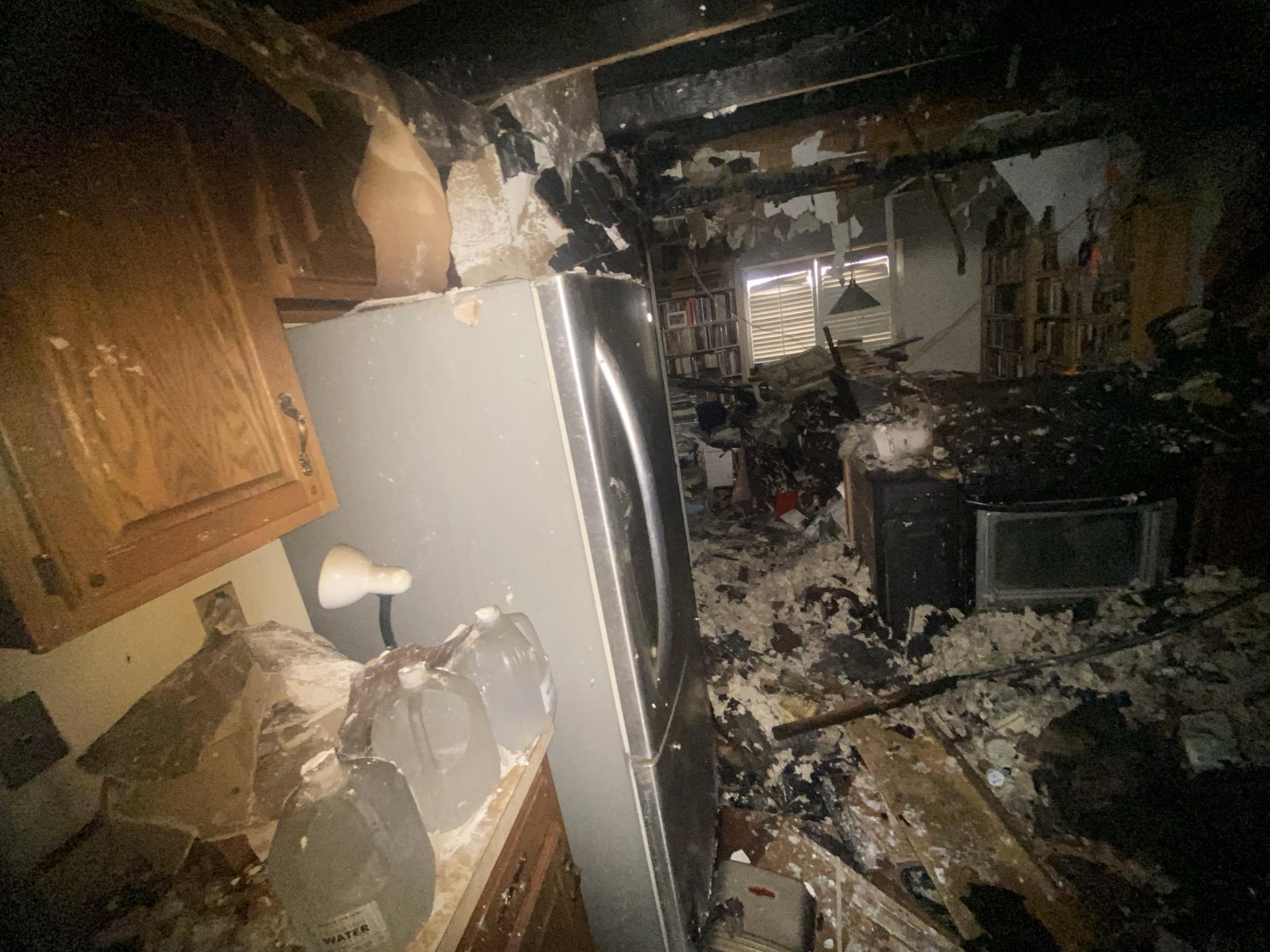
t’s one of the more confusing parts of recovering from a house fire: the fire itself might be confined to the kitchen, fully extinguished, and the visible damage contained to one room, and yet the smell shows up in bedrooms, closets, and hallways that never came close to the flames. That’s not imagination, and it’s not just smoke that “got into everything” in some vague sense. It’s a specific, physical process, and understanding it is the difference between cleaning what you can see and actually solving the problem.
Smoke is made up of microscopic particles and gases small enough to travel wherever air moves, which in most homes means through the HVAC system. Cooking fires, the leading cause of home fires nationally, are especially good at generating this kind of airborne residue, since a kitchen fire tends to produce a heavy concentration of fine particulate close to a return air vent. Once those particles get pulled into the return, they don’t just pass through the ductwork on their way out, they coat the interior surfaces the way smoke residue coats a wall or a ceiling. From that point forward, every supply vent connected to that same system becomes a source, releasing a faint version of that smell into every room it serves, long after the fire itself is a memory.
This is also why smoke odor tends to get worse, or at least more noticeable, once the weather cools and windows start staying closed. A house that’s been getting fresh air exchange all summer starts recirculating the same indoor air more as fall sets in, which means any odor still sitting in the ductwork has fewer chances to dilute and more chances to concentrate. A smell that seemed to be fading in August can seem to come back in October, not because the fire damage got worse, but because the house’s airflow pattern changed.
The practical implication is that cleaning visible soot and repainting affected surfaces addresses the damage you can see, but it doesn’t address a duct system that’s still actively circulating odor. This is true whether the fire happened in a house or in a commercial building with a shared HVAC system serving multiple units or tenants, since the same physics apply regardless of the building type: soot-coated ductwork is a source, not a bystander, until it’s actually cleaned or, in more severe cases, replaced.
Knowing this changes what “the smell is gone” should actually mean. Odor that returns after a cleaning effort, especially one that skipped the ductwork, usually isn’t evidence that the first cleanup failed. It’s evidence that the first cleanup never reached the actual source. A fire restoration process that treats the HVAC system as part of the job, not an afterthought to it, is addressing the thing that’s actually causing the smell to persist.
By the numbers:
- An estimated 343,000 residential building fires occurred in the U.S. in 2024, according to the U.S. Fire Administration.
- Cooking was the leading cause of home fires in 2024, accounting for 46.7% of residential building fire incidents, per the same U.S. Fire Administration data.
- Fire and lightning account for about 1 in 425 insured homeowner claims annually, with an average claim cost of $88,170 (2019-2023 average), the highest average cost of any major homeowners claim category, per the Insurance Information Institute.
Sources: U.S. Fire Administration, national fire statistics; Insurance Information Institute, “Facts + Statistics: Homeowners and Renters Insurance”
Call Ram Restoration for fire and water damage restoration: 937-885-0088 or www.ramrestorationusa.com