Fascia rot is one of those problems that seems to appear out of nowhere, a soft, discolored, sometimes crumbling board along the roofline that looks fine from the ground until it suddenly doesn’t. It’s rarely sudden. Fascia damage is almost always the end result of a slow, repeated process that starts the moment a gutter stops draining the way it’s supposed to, which is exactly why leaf season is worth paying attention to before it becomes a repair.
What actually happens when a gutter overflows instead of draining?
A functioning gutter channels water off the roof edge and into a downspout, away from the house. A gutter clogged with leaves, seed pods, and debris can’t do that, so instead of one controlled discharge point, the water finds the path of least resistance: over the front lip of the gutter, directly onto whatever is behind and below it. That’s almost always the fascia board, the trim piece that caps the roof edge and that the gutter is mounted to. A functioning gutter touches the fascia briefly during normal rainfall. An overflowing one soaks it, repeatedly, for as long as the clog persists.
Why doesn’t this show up as an obvious leak right away?
Because wood doesn’t fail on the first exposure. Fascia is typically painted or primed wood, or in some cases a wood composite, and it can tolerate occasional moisture without visible damage. What it can’t tolerate is chronic, repeated wetting without a chance to fully dry between events, which is exactly the pattern a clogged gutter creates over the course of a rainy fall. The wood absorbs a little more each time, the paint film that was protecting it starts to fail from behind, and the damage builds for weeks or months before a soft spot or visible discoloration finally shows up somewhere a homeowner can see it from the ground.
Does that moisture stay contained to the fascia board itself?
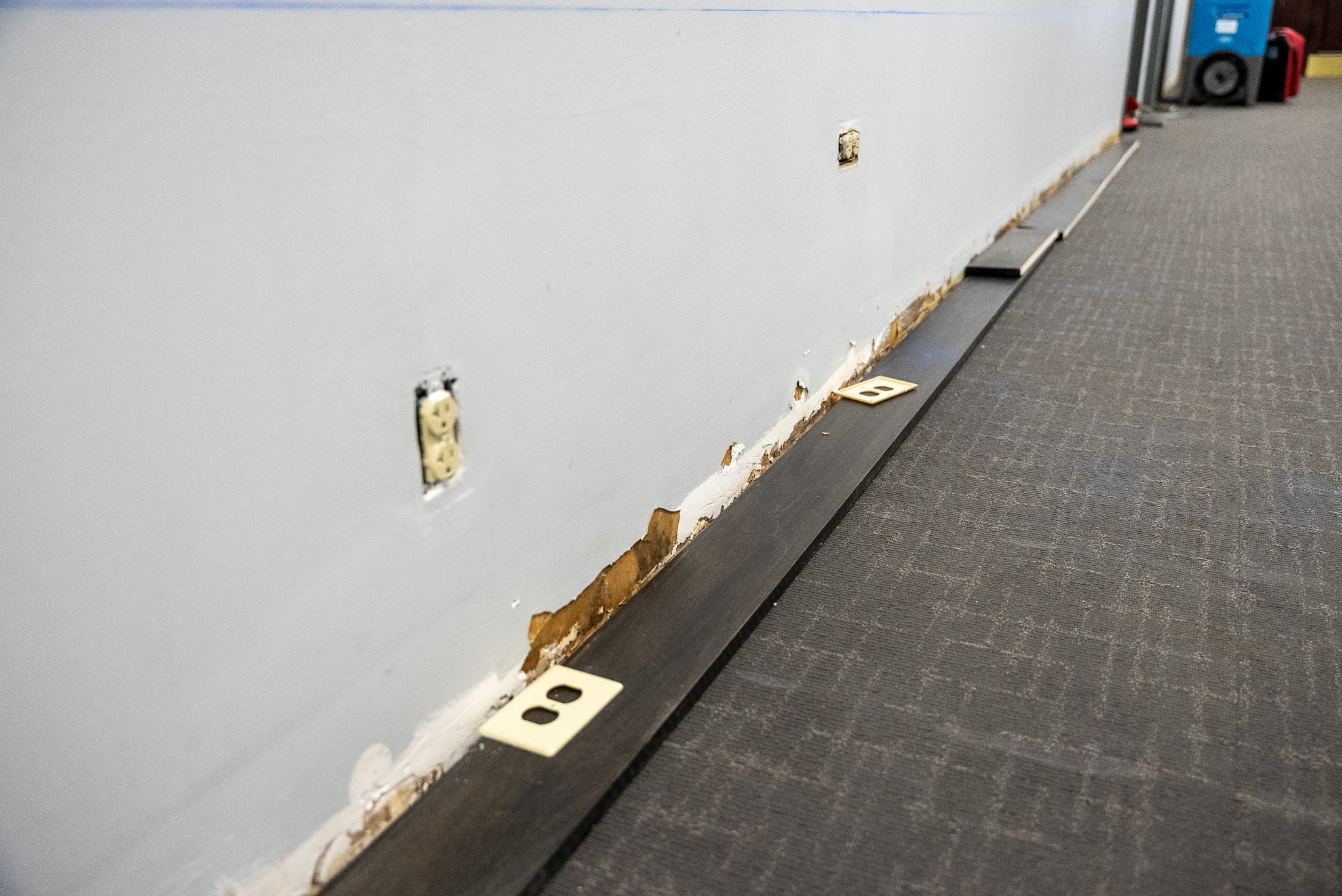
No, and this is the part that turns a trim repair into a bigger job. Fascia sits directly against the roof deck and the soffit, the horizontal panel underneath the roof overhang, and once a fascia board is saturated long enough, that moisture doesn’t stay politely inside its own board. It wicks upward into the roof deck along the edge, and it wicks inward into the soffit framing. Ram Exteriors technicians commonly find that by the time fascia rot is visible from the ground, the soffit behind it and the roof deck’s edge are also affected, meaning the actual repair scope is larger than “replace one board.”
Can this actually cause an interior leak without any ice involved?
Yes, and this surprises a lot of homeowners who associate “ice dam” with every winter roof-edge leak story they’ve heard. Debris-clogged gutters can back water up at the eave even in perfectly liquid, above-freezing conditions, simply because the water has nowhere to go and the roof edge isn’t designed to hold standing water indefinitely. That backed-up water can work its way under the first course of shingles and into the roof deck, eventually showing up as a ceiling or wall stain inside the house, with no storm, no ice, and no obvious external cause the homeowner would think to connect back to the gutters.
Does the damage ever go beyond the roofline itself?
In more advanced cases, yes. Deck ledger boards, porch framing, and fascia brackets located near a chronically overflowing gutter section see accelerated wood decay compared to the rest of the house, because they’re catching the same repeated overflow the fascia is. This is one of the more overlooked parts of gutter neglect: the damage pattern isn’t limited to “the gutter and the board directly behind it,” it follows wherever that overflow water actually lands, which can include structural framing well beyond the gutter run itself.
Why is fall specifically the season this tends to catch up with people?
Leaf accumulation is the trigger event, not the underlying cause. A gutter that drains fine all summer can be fully blocked within a few weeks once deciduous trees start dropping leaves, and Dayton-area fall rainfall doesn’t pause to wait for someone to clean them out — October and November are both meaningfully wet months in this region, which means a clogged gutter in October has real volume to deal with, not just an occasional light shower. A gutter that gets cleaned once, right after leaf-drop, before the fall rain pattern sets in, avoids the entire slow-saturation cycle described above.
What’s the actual takeaway for a homeowner looking at their roofline right now?
Don’t wait for a soft spot or a visible stain to treat gutter maintenance as urgent. The absence of a visible problem doesn’t mean the fascia, soffit, and roof deck aren’t already absorbing repeated moisture behind the scenes. A clear, freely-draining gutter run through the fall rain season is one of the cheapest ways to prevent a trim repair from becoming a roofline and framing repair.
By the numbers:
- Water-damaged materials need to dry within 24 to 48 hours to prevent mold growth from taking hold, per EPA guidance on mold and moisture control — the same drying-window principle applies to repeatedly-wetted fascia and soffit wood, just triggered again and again across a rainy season rather than once.
- Dayton, Ohio’s normal precipitation is 2.95 inches in October and 3.07 inches in November, per NWS climate normals for the Dayton station — both meaningfully wet months for a gutter system that isn’t draining freely.
- 1 gallon of water weighs 8.34 lbs, a physical constant worth keeping in mind for how much repeated weight a clogged, water-holding gutter section puts on its hangers and brackets over time.
Sources: U.S. Environmental Protection Agency, “A Brief Guide to Mold, Moisture and Your Home”; National Weather Service, Wilmington OH office, Dayton climate normals; U.S. Geological Survey, Water Science School
Call Ram Restoration for water damage restoration and assessment: 937-885-0088 or www.ramrestorationusa.com