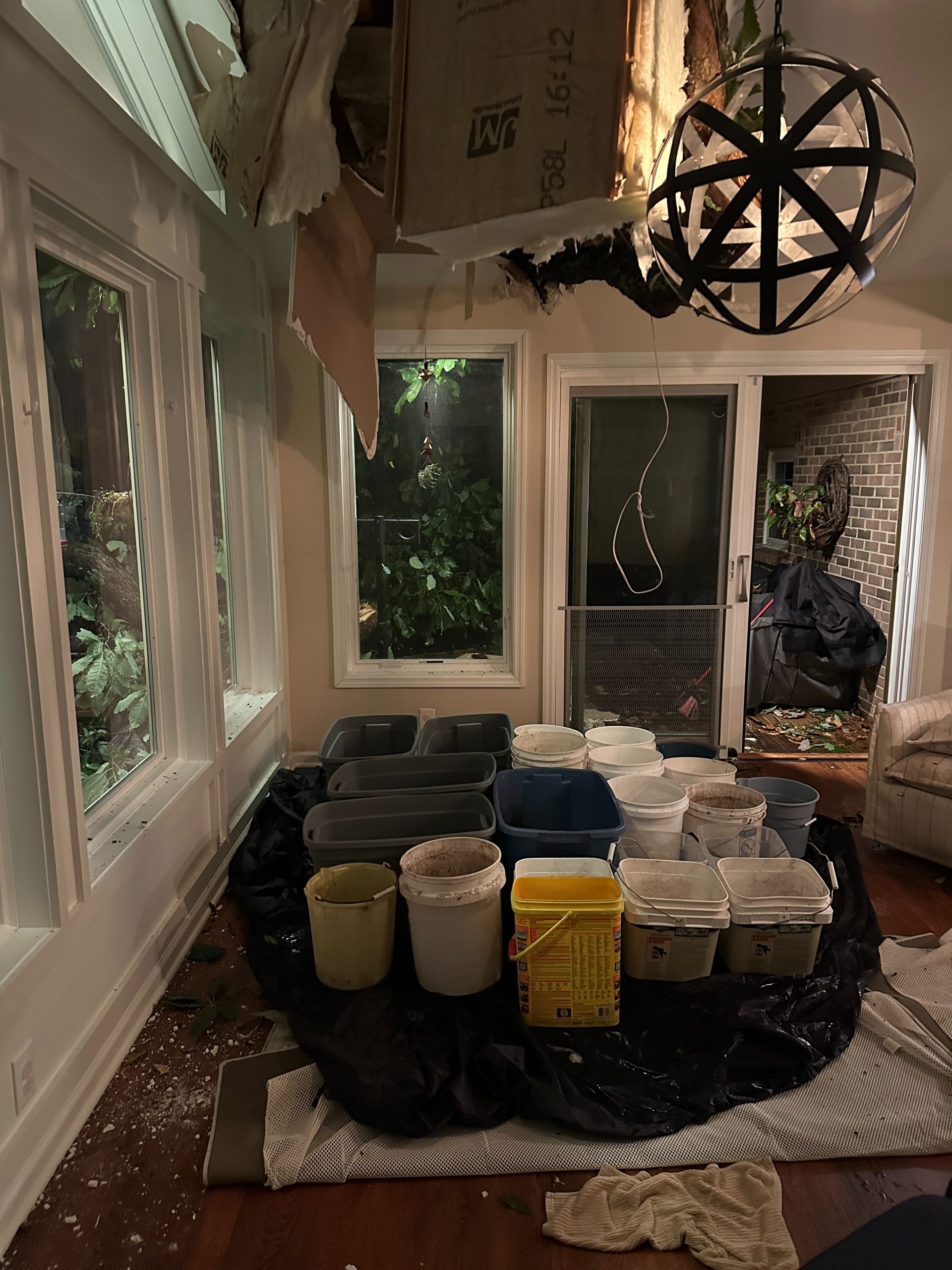
After a storm, the middle of a wall or the center of a floor can look completely unaffected while the baseboard a few feet away is already staining. That’s not a coincidence, and it’s one of the more reliable early signs restoration crews look for.
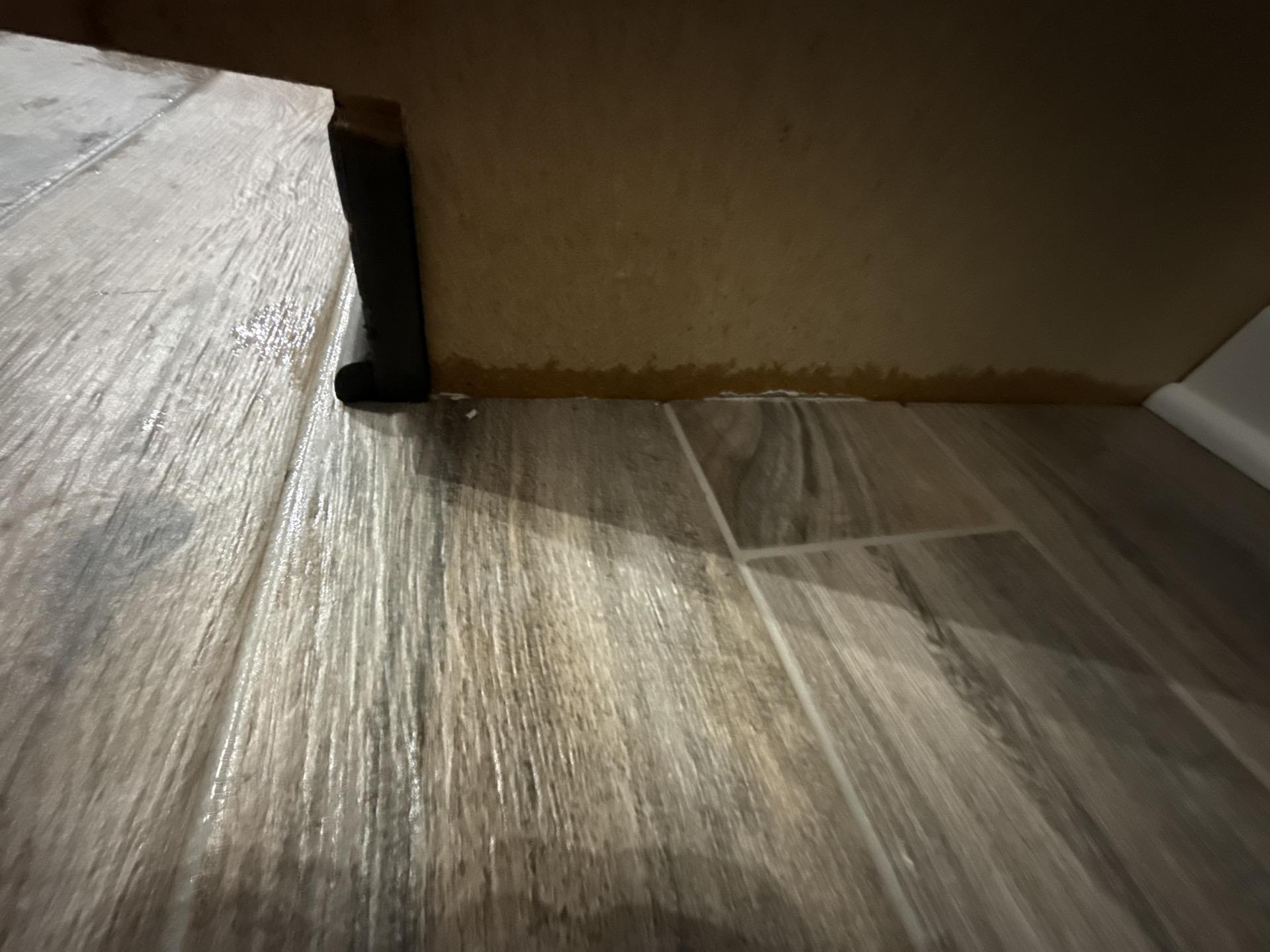
Baseboards sit at the lowest point of a wall, exactly where gravity and simple capillary movement bring moisture that’s traveled through flooring, framing, or a slow leak. Water moving through a porous material doesn’t stop cleanly at a surface, it wicks sideways and downward until it reaches an edge, and the edge is usually a baseboard or a floor corner like the one pictured. According to EPA guidance on water-damaged materials, drywall in this kind of situation may be dried in place only if there’s no obvious swelling and the seams stay intact, otherwise it’s treated as a removal-and-replace situation.
This matters because a homeowner scanning a room for damage is often looking in the middle of walls and floors, the areas that look the worst on television, when the actual first evidence tends to show up low and at the edges. Missing that early sign means the moisture behind it has more time to spread before anyone notices.
The practical takeaway, especially after the kind of rain the Dayton area just had: walk the baseboards, not just the walls. Staining, softness, or separation at that low edge is worth a professional look even when the rest of the room looks fine.
By the numbers:
- The EPA’s guidance for water-damaged materials specifies that drywall may be dried in place within 48 hours if there’s no obvious swelling and seams remain intact; otherwise, removal and replacement is recommended.
- Water moving through porous building materials travels by capillary action, which explains why staining commonly appears at low edges and corners before the center of a wall or floor shows any sign.
- Ram Restoration checks baseboards, corners, and other low-point areas as a standard part of every water damage assessment across Dayton and the Miami Valley, not just the areas that show visible staining.
Source: U.S. EPA, “Water Damage Table” (Mold Prevention in Mold Remediation in Schools and Commercial Buildings)
Call Ram Restoration to schedule a water damage assessment: 937-885-0088 or www.ramrestorationusa.com