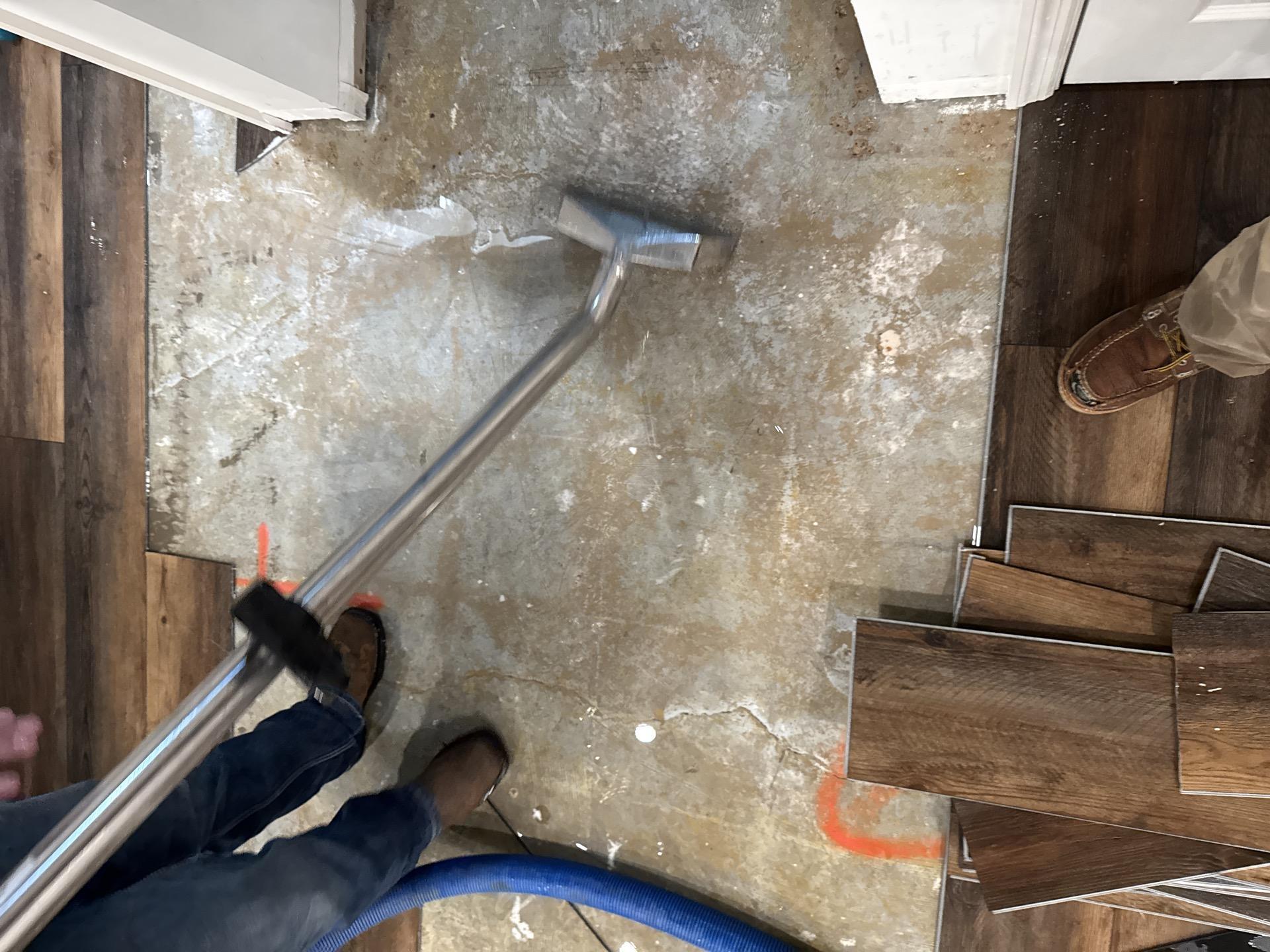
It’s a fair question, and one Ram Restoration hears often: the wand has already pulled the standing water off the floor, so why does the job description say the work isn’t finished?
Extraction and drying are two different steps, not one. Extraction, the process pictured here, removes the water that’s sitting on top of a surface, carpet, tile, or subfloor. What it doesn’t remove is the moisture that’s already soaked into the pad underneath, the subfloor, and the framing below that. According to the EPA’s own guidance for handling water-damaged materials, carpet that’s been wet for 48 hours or less can typically be extracted and then dried in place with dehumidifiers and air movers, but that drying step takes real time on its own, separate from the extraction that happened first.
This matters because a room can look finished the moment the wand is put away, while the materials underneath are still well above a safe moisture level. Stopping there, rather than running equipment through the full drying window, is exactly how moisture gets trapped in places it’s hard to find later.
For anyone watching drying equipment run in their own home longer than they expected, the practical takeaway is that this isn’t equipment left on by mistake. It’s the second, slower half of a two-part process, and it’s the half that actually determines whether the materials come back to a safe condition.
By the numbers:
- The EPA’s water damage guidance for cleanup and mold prevention treats carpet extraction and structural drying as separate steps, with drying typically continuing well after extraction is complete.
- Materials wet for 48 hours or less are generally candidates for drying in place; guidance shifts toward removal and replacement the longer materials stay wet beyond that window.
- Cellulose and fiberglass insulation are treated differently than carpet or drywall in EPA guidance, since wet insulation is generally recommended for discard and replacement rather than drying in place.
Source: U.S. EPA, “Water Damage Table” (Mold Prevention in Mold Remediation in Schools and Commercial Buildings)
Call Ram Restoration to schedule a water damage assessment, day or night: 937-885-0088 or www.ramrestorationusa.com