Once the initial assessment is done and the source of water is stopped, the next phase looks, to most people, like a room full of loud fans and a few humming machines. What’s actually happening during extraction and drying is more deliberate than “blow air at it until it feels dry,” and understanding the real process explains why a job takes the number of days it takes, and why cutting that process short usually costs more later.
What actually happens during extraction, before the fans even go on?
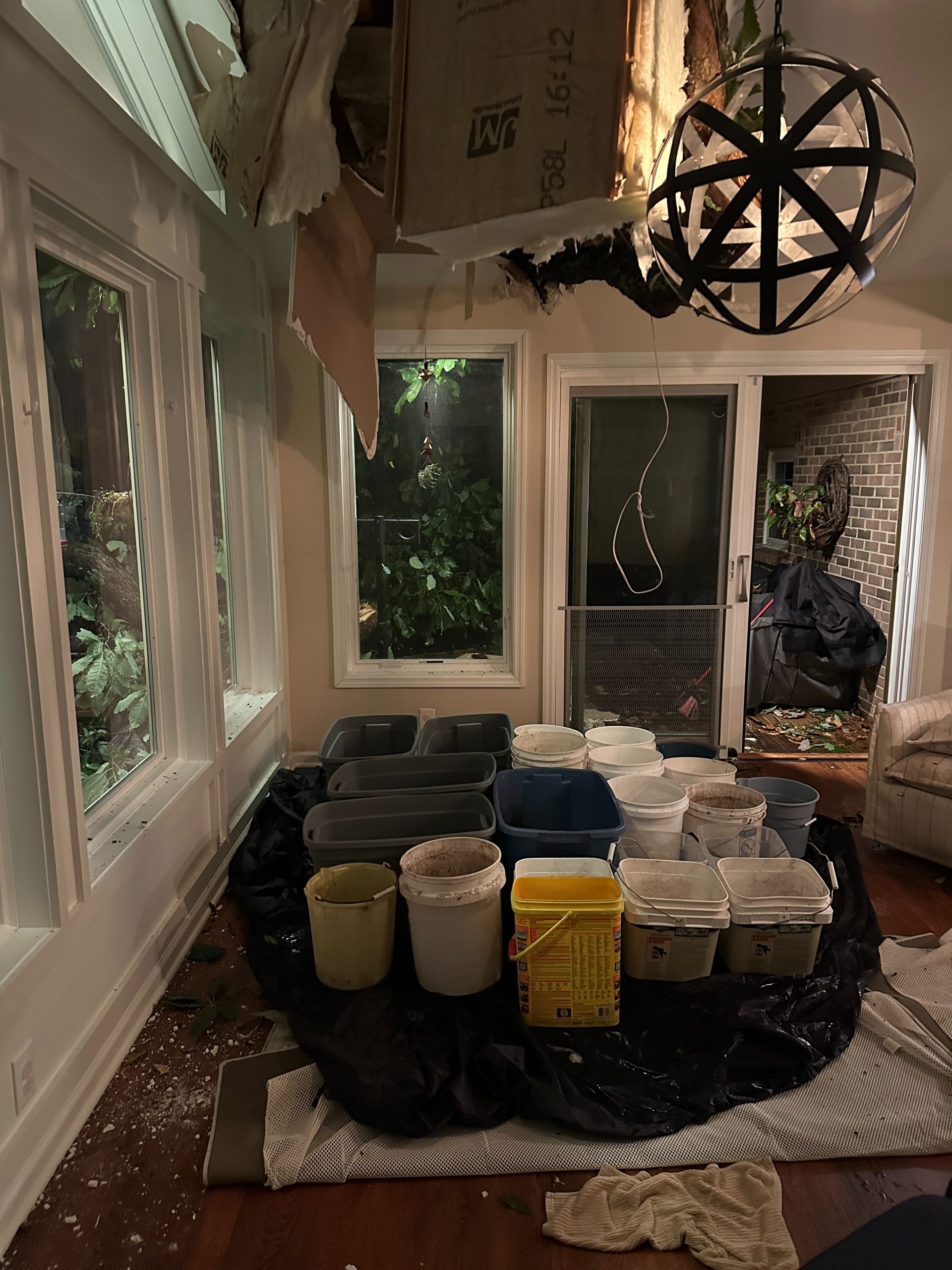
Extraction comes first, and it’s exactly what it sounds like: removing standing and free water from the affected area using pumps and specialized vacuum equipment before drying equipment is placed. This step matters more than it might seem, because every gallon of standing water removed mechanically is water that doesn’t have to be pulled out slowly through evaporation over the following days. A thorough extraction pass, including from carpet padding and other absorbent materials that can hold significant water even after a surface looks dry, shortens the entire drying timeline that follows it.
Why does drying take days instead of hours?
Because structural drying isn’t just about air movement, it’s about psychrometry, the science of controlling temperature, humidity, and airflow together to pull moisture out of building materials at a controlled, monitored rate. The IICRC’s S500 standard devotes a dedicated chapter to psychrometric principles specifically because getting this wrong, either by rushing it or by applying the wrong combination of heat and airflow, can drive moisture further into a material or create secondary damage rather than resolving the problem. A wall that looks and feels dry to the touch on day one can still hold moisture deep in the framing that takes several more days of monitored drying to fully resolve.
What are the air movers and dehumidifiers actually doing, mechanically?
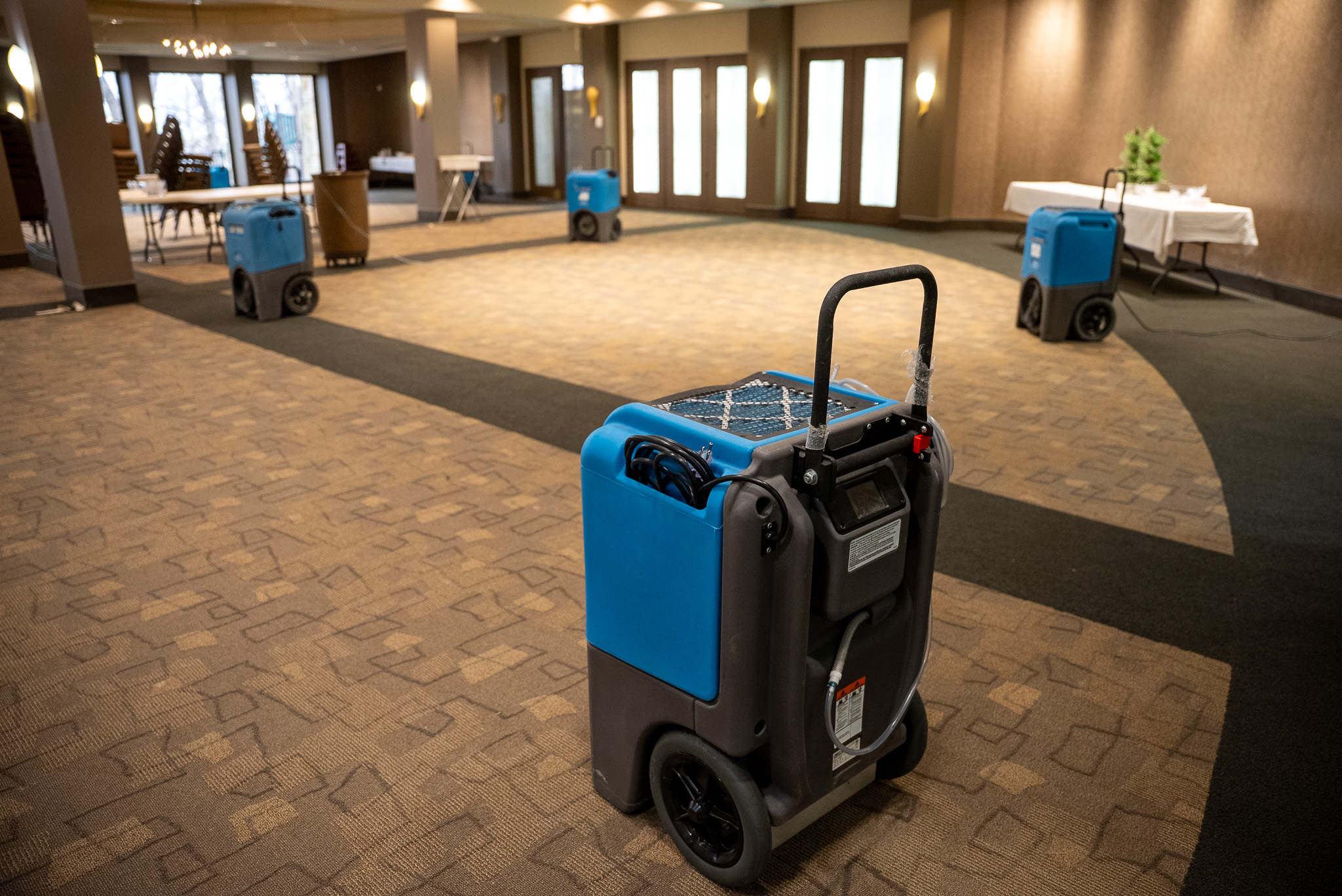
Air movers increase evaporation by moving air across wet surfaces, which speeds the rate at which surface moisture converts to vapor. Dehumidifiers then pull that water vapor out of the air, since a room full of humid air will eventually slow evaporation to a stop as the air becomes saturated and can’t absorb more moisture. The two pieces of equipment work as a system, air movers push moisture out of materials and into the air, dehumidifiers pull it back out of the air, and running one without the other is a meaningfully less effective setup than running both together, which is why a professional drying plan places specific equipment counts based on room size and material type rather than just filling a space with fans.
How does a restoration crew know when something is actually dry, rather than guessing?
Through daily moisture monitoring with meters, not visual inspection or touch. A widely used building-science benchmark from the U.S. Department of Energy’s Building America Solution Center and ENERGY STAR guidance treats roughly 18% moisture content or lower as the target for wood-frame materials before they’re considered safe to close back up or rebuild against. Materials get checked against that kind of numeric target daily throughout the drying process, and equipment placement or settings get adjusted based on those readings, not left running on a fixed schedule and hoped to be sufficient. This is also why a drying job doesn’t have a single fixed timeline that applies to every situation, a Class 4 specialty-drying scenario involving dense, saturated material takes meaningfully longer to reach that same target than a Class 1 scenario does.
What happens if drying gets cut short, equipment gets pulled early, or a homeowner just wants the noise gone?
This is one of the more common tensions in a real restoration job, because air movers and dehumidifiers running continuously for several days is genuinely disruptive, and it’s understandable that homeowners want that phase to be over. But moisture readings that haven’t reached target aren’t a formality, they’re the actual determination of whether a material is safe to rebuild against without trapping moisture behind new drywall or flooring, which is exactly the kind of hidden problem that leads to mold growth weeks or months later, invisible until it isn’t. A drying plan that ends on a calendar guess rather than a moisture reading is a real risk being taken on faith.
Is there a specific certification that applies to this phase specifically?
Yes. The IICRC’s Applied Structural Drying (ASD) certification is a distinct credential from the general Water Damage Restoration Technician (WRT) certification, and it requires the WRT certification as a prerequisite plus in-person, hands-on training, it isn’t available purely online. It’s reasonable for a homeowner to ask whether the technicians managing a drying plan hold that specific credential, since it reflects specialized training in exactly the psychrometric principles described above, beyond the general water restoration training every technician on a job typically has.
What should a homeowner actually watch for during this phase?
Ask what the daily moisture readings are showing, not just whether the space “feels” dry, and ask what the target moisture percentage is before equipment comes out. A restoration company that’s tracking and can share specific numbers is running an actual monitored process. One that can only offer a general timeline without numbers to back it up is asking for trust without giving a homeowner anything concrete to evaluate that trust against.
By the numbers:
- Roughly 18% moisture content or lower is a widely used industry and building-science benchmark for wood-frame materials to be considered dry enough to close up or rebuild against, per the U.S. Department of Energy’s Building America Solution Center and ENERGY STAR guidance.
- The IICRC’s Applied Structural Drying (ASD) certification requires the Water Damage Restoration Technician (WRT) certification as a prerequisite and is only available through in-person, hands-on training.
- The IICRC S500 standard, now in its 5th edition (2021), includes a dedicated chapter on psychrometry, the science governing how temperature, humidity, and airflow interact during structural drying.
Sources: U.S. Department of Energy, Building America Solution Center; ENERGY STAR; Institute of Inspection, Cleaning and Restoration Certification (IICRC), S500 Standard for Professional Water Damage Restoration, 5th Edition (2021)
Call Ram Restoration for water extraction and structural drying: 937-885-0088 or www.ramrestorationusa.com