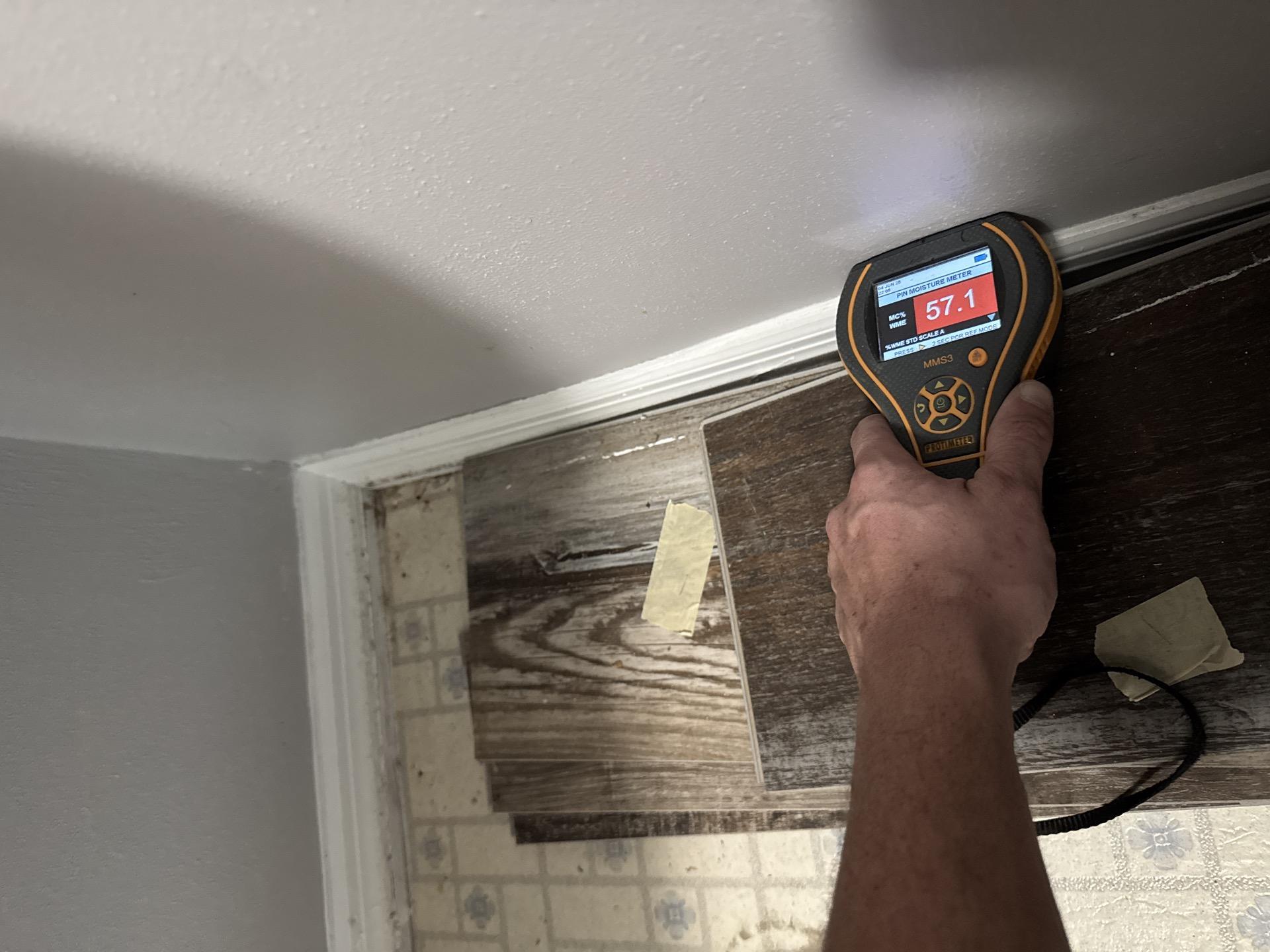
Sometimes yes, often no, and the difference almost always comes down to one factor: electricity, not water damage in the way most people picture it. A refrigerator that sat in two inches of water for an afternoon is not automatically a total loss, but it’s also not something to simply dry off and plug back in. The moisture reading pictured here, taken on kitchen flooring near a doorway threshold, represents exactly the kind of assessment that has to happen before anyone touches an appliance in a flooded kitchen, because the visible water is rarely the real hazard.
Why is electricity the bigger concern than water itself?
Because water and electrical components don’t fail in an obvious, visible way. The U.S. Consumer Product Safety Commission is direct about this: before using appliances after a flood, a professional or the gas or electric company should evaluate the property and replace all gas control valves, electrical wiring, circuit breakers, and fuses that have been under water. That guidance exists because submerged wiring and controls can develop corrosion and insulation breakdown that isn’t visible from the outside, and a component that looks fine can fail later, sometimes as a shock hazard, sometimes as a fire hazard. The CPSC is equally direct about the immediate risk: don’t touch wet appliances that are still plugged into an electrical source.
Does it matter how deep the water was?
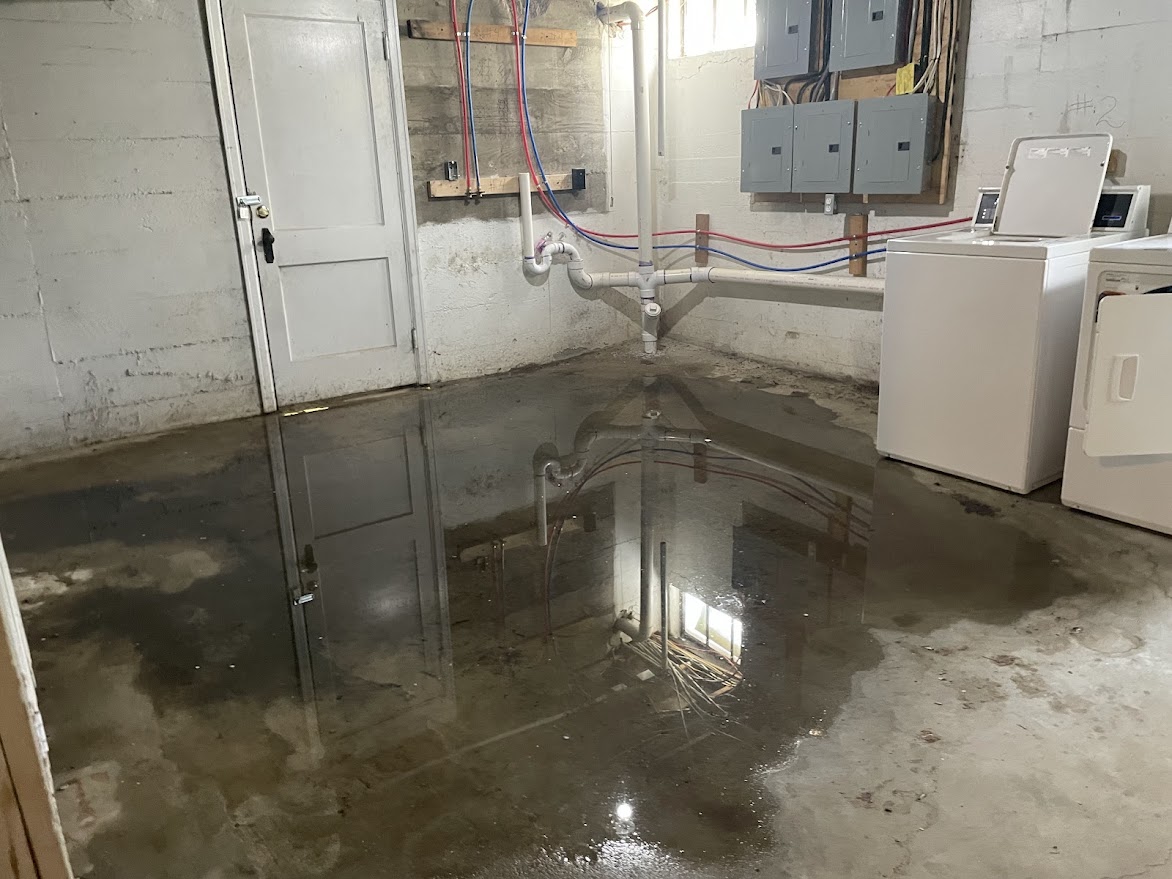
Yes, significantly. An appliance that experienced surface splashing or a shallow amount of standing water around its base is a very different situation from one that was fully submerged, especially if water reached the control panel, motor housing, or internal wiring. As a general rule, anything with electrical components that was submerged, even briefly, needs professional evaluation before it’s powered back on. Surface moisture on an exterior panel is a cleaning problem. Water inside the appliance’s electrical components is a safety problem, and the two aren’t distinguishable just by looking at the outside of the unit.
What if an appliance was only splashed, not actually submerged?
Light surface exposure, a splash from a nearby leak, a small amount of standing water that never reached the appliance’s base panel, is genuinely a lower-risk category than full submersion, and not every flood-adjacent appliance needs the same level of scrutiny. The distinction to make is whether water reached any electrical component: the control board, the motor housing, wiring runs, or an outlet or power cord that sat in water. An appliance on a shelf or counter above the waterline that never had water reach its cord or housing is a very different case than one that was standing in it. When there’s genuine uncertainty about how high the water reached relative to an appliance’s components, that uncertainty itself is the reason to have it checked rather than guessed at.
What about appliances that seem to still work fine?
This is where the real risk lives. An appliance that powers on and appears to run normally after a flood can still have corrosion actively developing inside components that were wet. That corrosion doesn’t necessarily cause an immediate failure, it can cause a delayed one, weeks or months later, under conditions that are much harder to trace back to the original flood event. “It still works” is not the same evaluation as “an electrician confirmed the internal wiring and controls are safe,” and treating those as equivalent is one of the more common and more dangerous shortcuts homeowners take after a flood.
Does this apply to every kind of appliance the same way?
Not exactly, and this is a useful distinction. Appliances with simple, largely mechanical function and minimal electronics (some older washing machines, for example) tend to be more forgiving of water exposure than appliances with dense electronic control boards (modern refrigerators, dishwashers, and especially anything with a digital display or smart-home connectivity). The more electronics packed into an appliance, the more surface area there is for water intrusion to cause a problem, and the more essential a professional evaluation becomes before it goes back into service.
Where does moisture in the flooring fit into this decision?
This is what the reading pictured here actually represents. A moisture meter measurement on the kitchen floor near an appliance’s location tells a restoration team whether the subfloor and surrounding materials are still holding moisture that could keep affecting anything placed back in that spot, appliance included. Reinstalling an appliance, even a fully evaluated and cleared one, onto flooring that’s still elevated in moisture content just reintroduces the same conditions that caused the original problem. Getting the flooring back to a safe baseline moisture level is part of making the space safe for appliances again, not a separate, unrelated task.
So what’s the actual decision-making process?
Treat every flood-affected appliance as an electrical question first and a water-damage question second. Anything that was submerged, or came close to it, needs a professional evaluation of its wiring, controls, and internal components before it’s used again, regardless of how it looks or whether it powers on. Combine that with a moisture check on the surrounding flooring and structure, since putting a cleared appliance back into a still-wet space undoes the value of the evaluation. Some appliances come through that process fine. Others don’t. The point of the process is finding out which is which before someone gets hurt finding out the hard way.
By the numbers:
- Before using appliances after a flood, a professional or the gas or electric company should evaluate the property and replace all gas control valves, electrical wiring, circuit breakers, and fuses that have been under water, per U.S. Consumer Product Safety Commission guidance.
- The CPSC also advises against touching wet appliances that remain plugged into an electrical source.
- Water-damaged materials, including flooring beneath and around appliances, need to dry within 24 to 48 hours to prevent mold growth from taking hold, per EPA guidance on mold and moisture control.
Sources: U.S. Consumer Product Safety Commission, “CPSC Urges Flood Victims to Take Steps to Prevent CO Poisoning, Electrocution, Explosion and Fires”; U.S. Environmental Protection Agency, “A Brief Guide to Mold, Moisture and Your Home”
Call Ram Restoration to schedule a water damage assessment: 937-885-0088 or www.ramrestorationusa.com