Watching a crew cut into drywall that looks perfectly fine above the waterline is one of the more counterintuitive moments in a restoration project. It looks like extra damage being added on top of the original problem. In reality, it’s one of the more deliberate, standards-informed decisions in the entire process, and understanding why it happens changes how it feels to watch.
What is a “flood cut,” specifically?
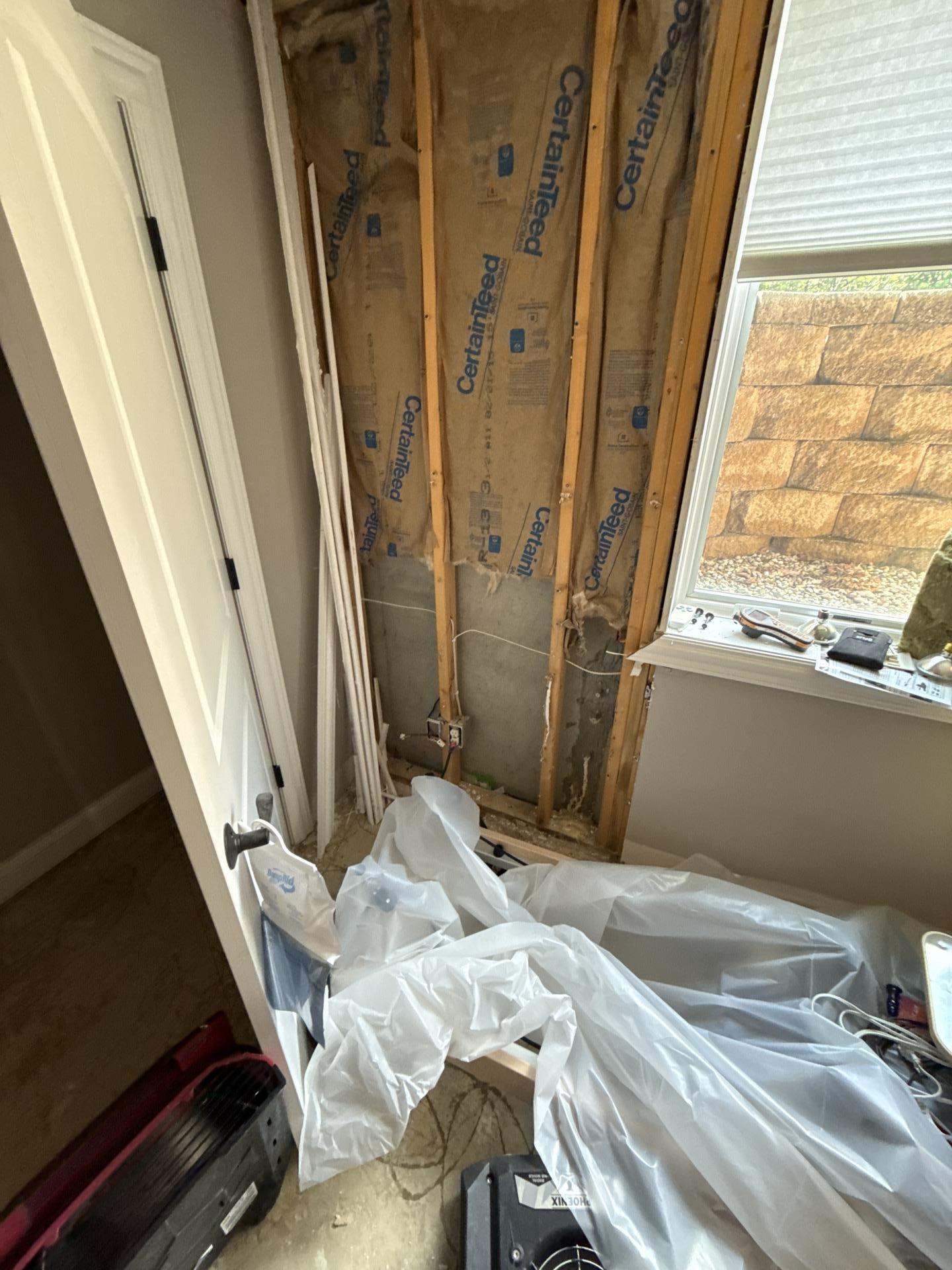
A flood cut is the controlled removal of drywall, and often the insulation behind it, in a horizontal line above the visible waterline, typically leaving a clean, straight edge rather than a ragged tear-out. It’s not the same thing as general demolition. The goal is to remove exactly the material that’s been affected, both by visible water and by wicking, the way water travels upward into drywall and insulation above the point where it initially stood, while leaving everything above that line intact wherever possible.
Why cut above where the water actually stood, instead of exactly at the waterline?
Because water doesn’t stop exactly where it looks like it stopped. Drywall and insulation both wick moisture upward through capillary action, meaning the affected zone typically extends several inches above the visible high-water mark, even though that upper section may look completely dry. Cutting exactly at the visible line risks leaving wet material in the wall cavity, hidden behind drywall that looks fine, which is precisely the kind of hidden moisture that leads to mold growth weeks later. The extra height on a flood cut isn’t overcutting, it’s accounting for a mechanism of water movement that isn’t visible from the outside.
Is there a specific, standardized height for how far above the waterline to cut?
This is worth being precise about, because a lot of restoration content states a specific number, often 12 to 24 inches above the waterline, as if it were a hard, codified standard. In researching this, we found that specific inch measurements are common field practice and appear frequently in restoration industry guidance, but they’re not a fixed number written into the IICRC S500 standard itself. The actual standard is that the cut should extend to cover the full extent of water migration and material saturation, which a technician determines using moisture meters on-site, not a tape measure applied to a fixed rule. A wall with less wicking might need a smaller cut; one with more extensive water movement, especially in a Category 2 or 3 event, might need more. Treat any specific inch number you read, including the ranges commonly cited in the industry, as typical field practice rather than a universal mandated figure.
Why does the water’s category affect how this demolition gets handled?
Because of contamination and safety considerations, not just material-saving decisions. When water is at least Category 2, moderately contaminated, or the affected area exceeds a substantial size, remediation professionals are expected to use a higher level of personal protective equipment than a small, clean-water project requires. Joint EPA and OSHA guidance for mold and moisture remediation draws a specific line around contaminated area size, generally recommending an elevated tier of respiratory and skin protection once contaminated material affected exceeds roughly 100 square feet, or in situations involving heavy mold growth or grossly contaminated (Category 3) water, compared to smaller, more limited-scope cleanup. This is a genuinely useful, specific data point most restoration content doesn’t cite directly, and it’s part of why a demolition crew working a larger or more contaminated area is suited up differently than one handling a small, clean-water flood cut.
Why shouldn’t a homeowner or a handyman just do this themselves?
Because the risk isn’t just cosmetic. OSHA’s own guidance on mold in the workplace is direct that people with certain health sensitivities, and really anyone without proper protective equipment, should not be the ones handling extensive mold-contaminated material removal, and the same caution reasonably extends to Category 2 and 3 water demolition more broadly, since both involve materials that can carry biological contamination. Beyond the exposure risk, an untrained demolition pass is also more likely to miss the actual extent of wicking damage, cutting at the visible waterline rather than accounting for capillary movement, which can leave contaminated or saturated material inside a wall that then gets closed back up.
Does removing insulation always happen too, or just drywall?
It depends on the insulation type and how much water it absorbed. Fiberglass batt insulation, like the kind visible in this photo, generally cannot be effectively dried once saturated and is typically removed and replaced rather than dried in place, since wet fiberglass loses much of its insulating value and can hold moisture against the framing behind it indefinitely. This is a specific, practical reason flood cuts often go a bit further than drywall alone, leaving wet insulation in a wall cavity defeats much of the purpose of doing the cut carefully in the first place.
What should a homeowner ask when a crew starts cutting?
It’s fair to ask what moisture readings determined the cut height, rather than assuming a generic number was applied without on-site verification. It’s also fair to ask about the water’s category classification and what protective measures are being used relative to the area size, since that connects directly back to the EPA/OSHA guidance above. A crew that can answer both specifically is working from an actual assessment, not a one-size-fits-all habit.
By the numbers:
- Joint EPA/OSHA remediation guidance generally recommends an elevated tier of personal protective equipment once contaminated material affected exceeds roughly 100 square feet, or in cases of heavy mold growth or Category 3 (grossly contaminated) water.
- Flood cut heights of roughly 12 to 24 inches above the visible waterline are common field practice, though the IICRC S500 standard itself defines the requirement functionally, extending fully through the zone of water migration and saturation, rather than mandating one fixed number.
- Saturated fiberglass batt insulation generally cannot be effectively dried in place and is typically removed and replaced, since it loses much of its insulating value once wet and can trap moisture against framing.
Sources: U.S. Environmental Protection Agency and Occupational Safety and Health Administration, joint mold remediation guidance; Occupational Safety and Health Administration, “A Brief Guide to Mold in the Workplace”; Institute of Inspection, Cleaning and Restoration Certification (IICRC), S500 Standard for Professional Water Damage Restoration, 5th Edition (2021)
Call Ram Restoration for water damage assessment and controlled demolition: 937-885-0088 or www.ramrestorationusa.com